
Santa Cruz County Warrant Searches
The official starting point is the Arizona Department of Public Safety Warrant Search. It accepts a first name, last name, and date of birth. All three are required. Courts across Arizona report records to that system, yet AZDPS warns that its public results are not guaranteed to be current, active, or complete. Treat any response as a lead to the court named in the result.
A careful Santa Cruz County warrant search touches each court level that might hold the matter. The Arizona Superior Court in Santa Cruz County handles felony matters and other cases within its jurisdiction. Nogales Justice Court handles misdemeanors, petty offenses, traffic cases, and early felony proceedings. Nogales and Patagonia Municipal Courts maintain their own city or town cases.
- Enter the full first name, last name, and date of birth in the AZDPS public form.
- Read the court name and authority information in any response. Do not act on a name alone.
- Use the Arizona Public Case Search to locate a related case and clerk, while remembering it is not a complete warrant search.
- Contact the named Superior, Justice, or Municipal Court and ask whether the warrant is active, recalled, quashed, served, or returned.
- If the record is still unclear, request it from the court or use the county's written public-record process. Ask an attorney before arranging an appearance or surrender.
Santa Cruz AZDPS Search Limits
AZDPS displays no more than five responses. A common name can therefore crowd out a relevant match. A blank response can also reflect a reporting delay, a recently issued warrant, a record held at a different court level, or a record that public access rules restrict. None of those outcomes proves that no warrant exists.
Search rule: A public result is preliminary. Current status comes from the court identified in the record.
Use date of birth to reduce same-name mistakes. If the result points to a court outside Santa Cruz County, contact that named court rather than asking a local clerk to interpret another court's order.
What a Warrant Search Asks For
The AZDPS form is brief. It does not offer a warrant-number or court filter. The date picker covers a stated range from 1900 through 2026, and the Apply button returns at most five responses. Accurate input matters because the search is based on identity fields, not on a Santa Cruz County-only roster.
| Field Label | Type | Required | Notes |
|---|---|---|---|
| First Name | Text | Yes | Use the legal first name. |
| Last Name | Text | Yes | Use the legal last name. |
| Date of Birth | Date picker | Yes | Narrows same-name responses. |
| Apply | Button | Yes | Submits all three identity fields. |
Confirm Santa Cruz Court Results
The court named in a result controls the warrant. For a Superior Court file, the Clerk of the Superior Court is the official record keeper. Limited-jurisdiction clerks maintain Nogales Justice Court, East Santa Cruz Justice Court, Nogales Municipal Court, and Patagonia Municipal Court matters.
Ask the clerk for current status, the case or authority number, the next required appearance, and the correct way to obtain written proof. A sheriff employee can address service, booking, or custody logistics, but cannot change a court order.
Santa Cruz County Warrant Search Results
A public response may identify the person, warrant or case authority, issuing court, offense description, issue date, and a status or bond-related entry. Exact fields vary because the statewide response and the source court's case record serve different purposes. Record the authority shown, then confirm every field with the issuing clerk.
| Authority number | A court or agency identifier, such as 1201, that helps route the inquiry. |
|---|---|
| Subject | Name and identifying details used to distinguish records. |
| Charge | The alleged offense or court obligation tied to the warrant. |
| Issuing court | The office that can confirm status and set the next step. |
| Status | May read active, served, returned, recalled, or quashed. |
Santa Cruz Written Record Fallback
When online tools do not settle the question, use the Santa Cruz County Public Records Request instructions. The county form asks for contact details, the department, a clear record description, the date range, the request purpose, and whether inspection or copies are sought. Route sheriff material to the Sheriff's Department records contact, not automatically to the Superior Court clerk.
A records request is not a motion to recall a warrant. It obtains eligible records. The issuing judge or court must change warrant status. Fees may apply, and Arizona law allows some material to remain withheld.
The official online request form shows how Santa Cruz County routes a precise request. That form helps when a searcher needs a documented response instead of an oral status check.
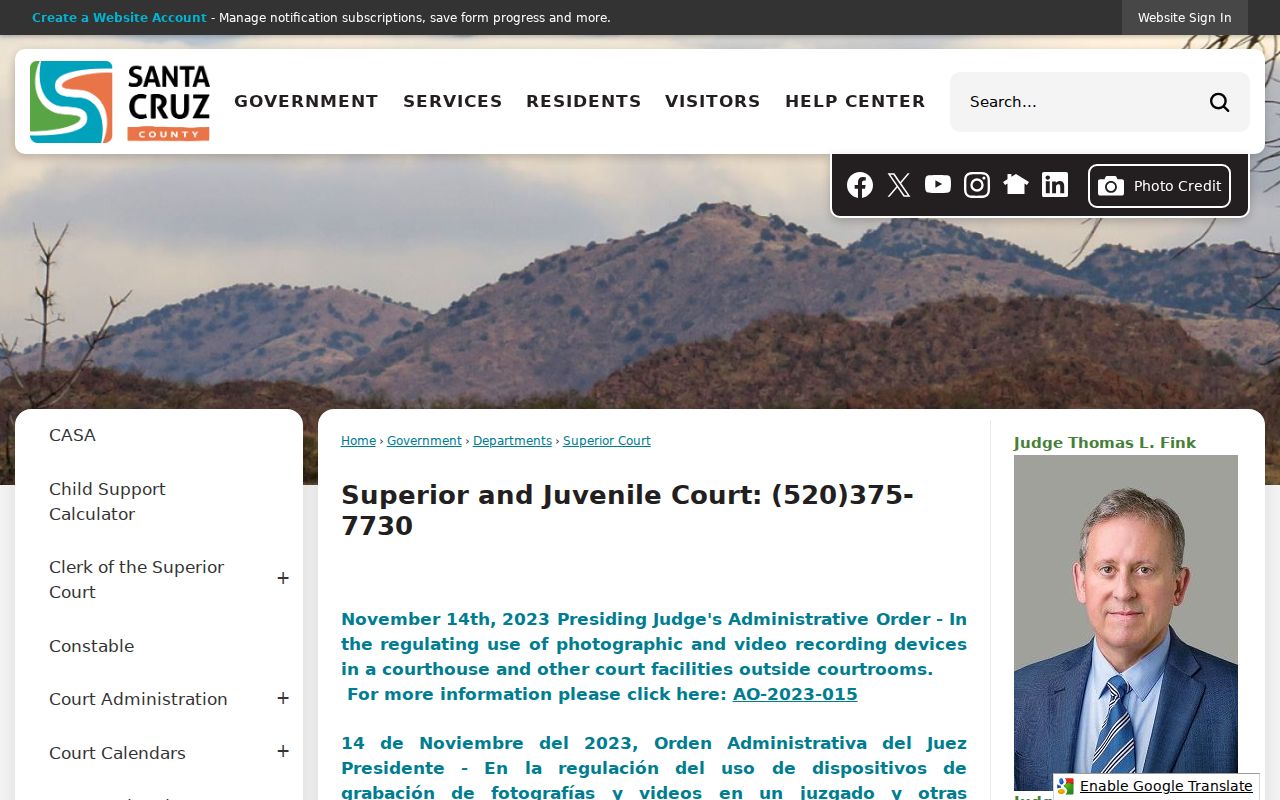
The Superior Court image reinforces why the court level matters: felony and general-jurisdiction records follow a different clerk path from city and Justice Court files.
Santa Cruz County Warrants: Who Holds What
AZDPS supplies the statewide public starting point. The Clerk of the Superior Court keeps Superior Court files. Nogales Justice Court and East Santa Cruz Justice Court keep their own limited-jurisdiction entries, while Nogales and Patagonia Municipal Courts control their local traffic, misdemeanor, and ordinance matters. The sheriff, city police, and constable may serve warrants that a court issues.
No Santa Cruz County Sheriff's Office public name-search roster was located in the official sources. Sheriff records can still help with service or booking records. The county lists sheriff records at (520) 375-5200 and sheriffrecords@santacruzcountyaz.gov; the main sheriff contact is (520) 761-7869.
Santa Cruz Status Terms
Status language can prevent a serious mistake. A record may remain visible even after the court acts, and a missing row does not prove clearance. Ask what each entry means in that court's current system.
- Active
- The warrant remains open for service.
- Served
- An officer executed the warrant.
- Recalled
- The issuing court withdrew it.
- Quashed
- A judge canceled its legal force.
- Returned
- The serving agency reported its disposition to court.
The county's court technology plan discusses future electronic-warrant synchronization, but it does not document a completed public portal. Court confirmation remains essential when two systems disagree.
Which Warrants Stay Restricted
Arizona Rule of Supreme Court 123 governs judicial-record access and permits limits on remote access. Juvenile records receive separate protection under A.R.S. § 8-208. Pre-charge warrant information can also remain unavailable until service, expiration, or quash under Arizona's updated warrant rules. A lawful restriction is not evidence that the clerk failed to search.
Key rules:
Sealed and protected records do not appear in ordinary public results.
Arizona juvenile-record law limits access to sensitive case information.
A pre-charge warrant may stay nonpublic before service, expiration, or quash.
The county request process operates under the Arizona Public Records Law, A.R.S. §§ 39-121 through 39-124. Judicial records follow court rules as well. Access and warrant status are separate questions, so confirm the live order with the issuing court.
The Clerk's official page describes its record-keeping and public-access role.
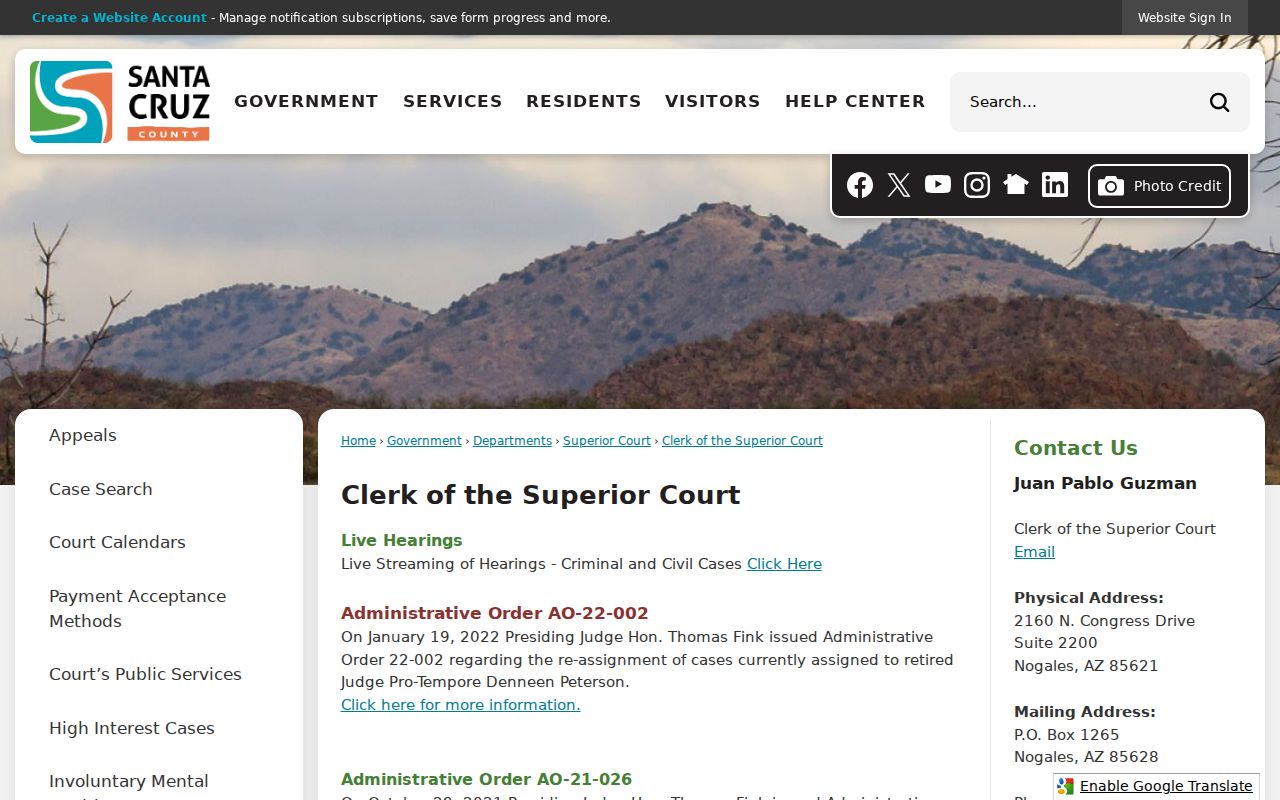
The clerk view connects public access to the office that keeps the source court file, which is more reliable than treating a statewide response as final.
Safe Santa Cruz Search Sequence
A safe check moves from broad to exact. Search AZDPS, identify the authority, locate the case if public access permits, and then confirm with the issuing clerk. If a result is active, ask a lawyer how to approach the court. If no result appears, check each court level linked to the event that caused concern.
After a recall or quash, keep the signed order and confirm that the clerk sent the update to law enforcement. Public displays can lag. A cleared warrant also does not end the underlying case, so attend every new date and follow all payment, release, or probation terms.