
Inside the Santa Cruz County Most Wanted Program
The Santa Cruz County Sheriff's Office posts no most-wanted roster, and neither Nogales nor Patagonia publishes a city fugitive list. That gap concerns public access only. Outstanding warrants still exist across Santa Cruz County; the courts hold that status, not a web page. Some cases draw state or federal task-force attention instead. For everyone else, the question is a simple warrant check. Ask the issuing court. Its clerk can confirm whether an order is active. No agency here curates a public fugitive list, so a neighbor's tip or an old news story is no substitute for court records.
No Santa Cruz County Roster
The official Sheriff page lists agency contacts but no name-search table and no most-wanted list. Nogales and Patagonia publish none either. Santa Cruz County residents checking their own status should skip social posts and stale news items. Call the court that issued the warrant.
Warrants in Santa Cruz County sit with several courts. The two municipal courts handle city matters, while Justice Court and Superior Court hold other case types, so a single local roster would never be complete.
How Santa Cruz County Most Wanted Lists Work
A most-wanted list is a hand-picked enforcement feature. An agency highlights a few cases where it wants the public's help. That is nothing like a full inventory of active warrants. Santa Cruz County agencies publish no local program page, so there is no selection rule, update schedule, or reward fund to read. The state fills that gap. The Arizona WANTED Task Force chases active state and federal warrants alongside the U.S. Marshals Service. Its casework can involve serious violence, weapons, felony-drug, and registration-related matters. Still, a task force is not a status desk. Only the issuing court can confirm whether a Santa Cruz County warrant is active.
Arizona WANTED Task Force
The state runs a team for fugitives called the AZ WANTED Task Force. It is a joint effort of state, federal, and local agencies. The team tracks down fugitives and helps bring back people held in other states. It is not a Santa Cruz County warrant search, though. No court warrant list comes from this program.
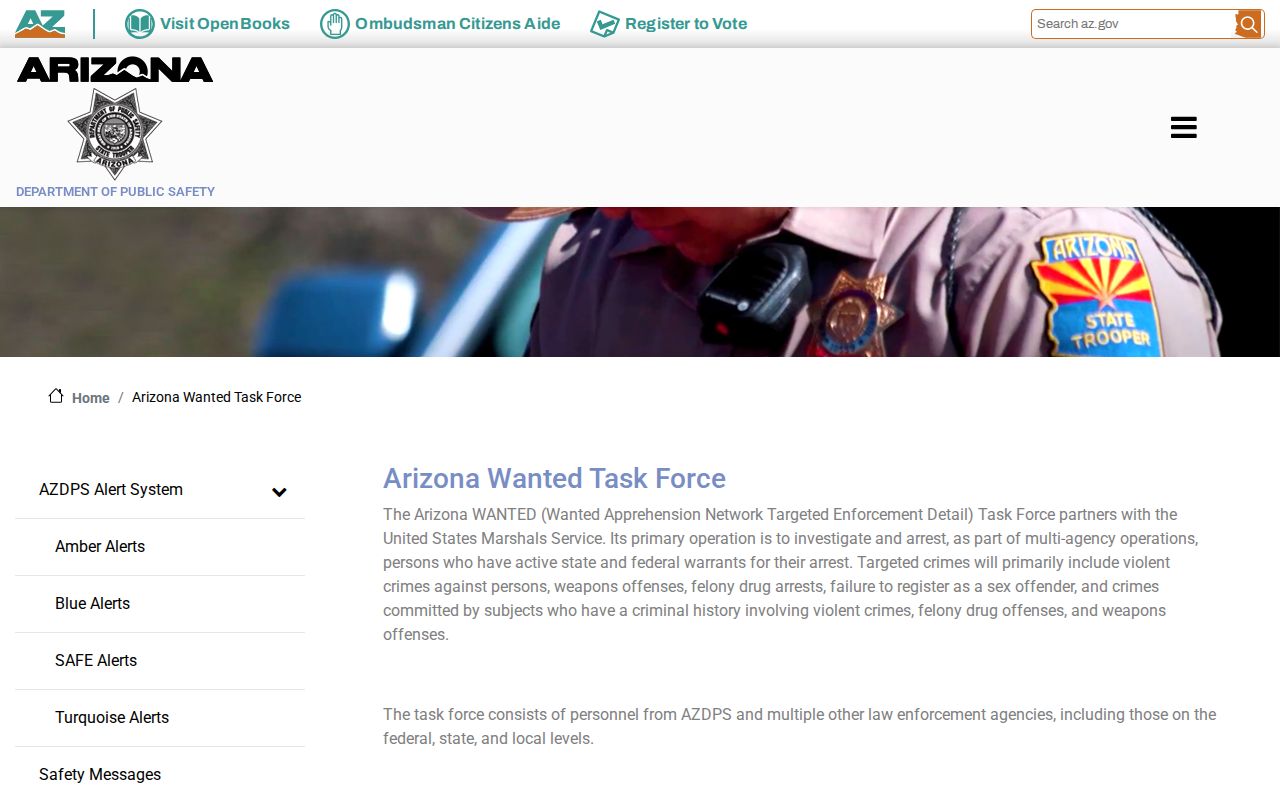
That program context separates a targeted fugitive operation from a routine Santa Cruz County name-and-birth-date warrant check.
Sending a Most Wanted Tip Safely
Send a tip only to the agency that published the official notice, whether that is a Santa Cruz County office or a federal partner. Never approach, follow, or detain anyone. Never post a location. If danger is immediate, call 911. The U.S. Marshals Service answers a 24-hour line at 1-888-869-4589 for federal or cross-jurisdiction fugitive tips, and the Tucson task-force number is (520) 237-0946.
- Open the current official agency notice and confirm its jurisdiction.
- Use the phone or online channel printed by that agency.
- Give direct observations, time, place, and vehicle facts without speculation.
- Follow the operator's safety instructions and keep distance.
- Do not expect or claim a reward unless the official program states one.
Safety: Send information through official channels and never attempt to make contact or carry out an arrest.
How Most Wanted Differs From an Active Warrant
The categories overlap, but they answer different questions. A most-wanted feature asks the public for help on selected enforcement cases. That is one job. A warrant search is different; it helps a person spot a possible court order and find the issuing court behind it.
| Source | Purpose | Coverage | Best next step |
|---|---|---|---|
| AZDPS Warrant Search | Preliminary self-check | Statewide reports, incomplete | Call listed court |
| Santa Cruz Sheriff roster | No public product found | None published | Use court or records route |
| AZ WANTED | Targeted enforcement | Selected state and federal matters | Use official tip channel |
| U.S. Marshals | Federal fugitive work | Federal and partner cases | Use district tip line |
One mix-up is worth flagging. Five AZDPS matches are not a Santa Cruz County top-five fugitive list; five is simply the public system's result cap.
AZDPS Is Not Most Wanted
The Arizona DPS public warrant search asks for a first name, last name, and date of birth. DPS itself warns that results are not real-time and are not represented as current, active, or complete. A Santa Cruz County check can start here. Five results are the cap. No court, agency, or status filters exist. Precinct and date filters are absent too, and the official DPS service directory lists the warrant search and the wanted-tip route as separate services.
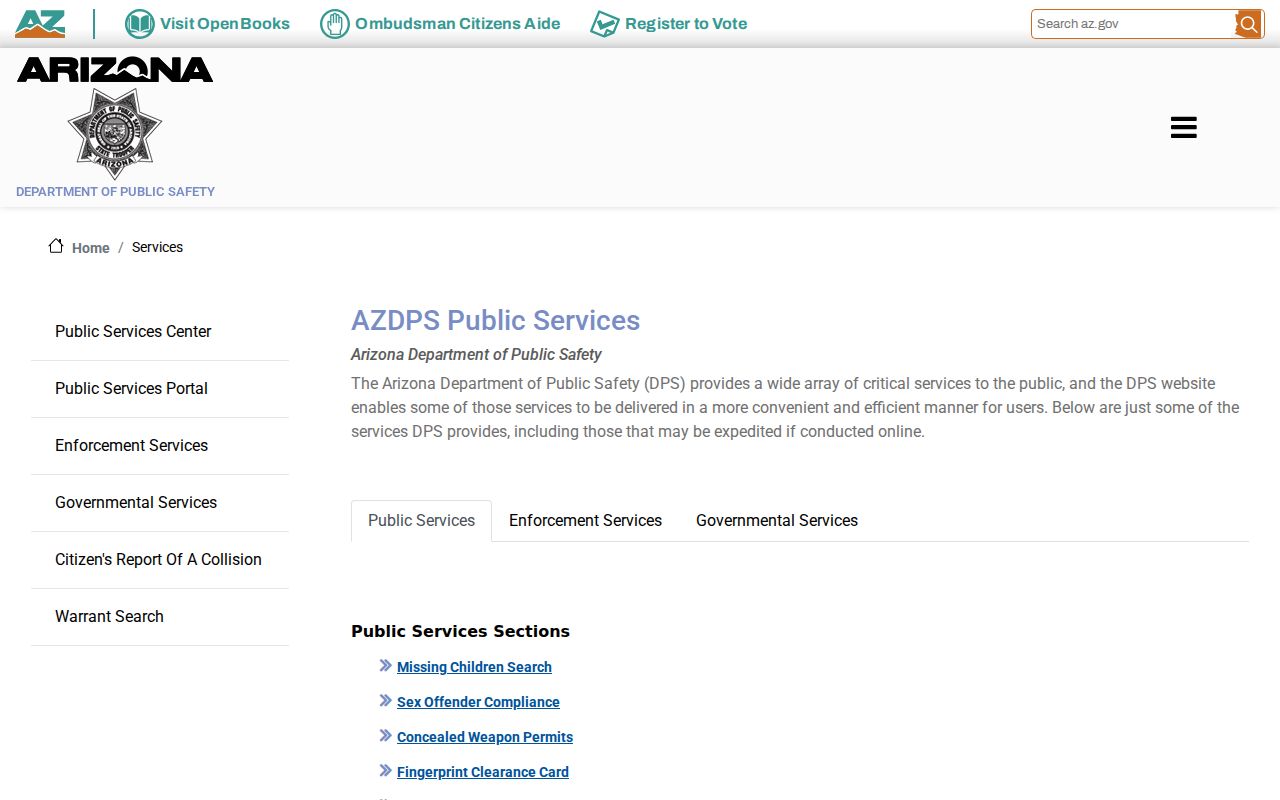
That separation matters. Use the warrant search only for a preliminary personal check in Santa Cruz County; the tip route exists solely for reporting information tied to an official agency notice.
County Warrant Confirmation Chain
Start with AZDPS. Write down any court or warrant number it shows. Then call that court. The Clerk of the Superior Court holds Superior Court files, while Nogales Justice Court, East Santa Cruz Justice Court, Nogales Municipal Court, and Patagonia Municipal Court each keep their own limited-jurisdiction matters. What if nothing appears? The court tied to the citation, notice, or missed date is still the best fallback in Santa Cruz County. Sheriff records can be reached at sheriffrecords@santacruzcountyaz.gov or (520) 375-5200. The public Sheriff line, (520) 761-7869, handles service or custody questions. A records request produces a document; it does not recall a warrant.
What County Programs Are Not
A task force does not decide whether a court order is valid. A tip line is not a status desk. A search result is not a promise of current status. A blank result is not clearance. These lines protect the caller and the court record alike, and they hold anywhere in Santa Cruz County.
- Active warrant
- A court order that has not been served, recalled, quashed, or otherwise closed, subject to court confirmation.
- Most wanted
- A selected enforcement publicity category, not every active warrant.
- Recall
- The issuing court withdraws its warrant.
- Task force
- Agencies working together on chosen enforcement matters.
Santa Cruz County publishes no official reward terms for tips. Never send money, gift cards, account details, or crypto to anyone who claims a warrant can be cleared by phone.
When You Believe You Are Listed
A fugitive notice can linger online after the agency that posted it takes it down. Another site copies it and treats it as current. Trust the live official source instead. An archived image proves nothing today. Only the issuing court controls legal status of a Santa Cruz County warrant, not a copied post. Never call a tip line to negotiate your own warrant. Save the official page, note the court if one is named, and talk to a lawyer. Counsel can check current court status and raise voluntary surrender, the initial appearance, release conditions, and bond. A bond secures a future court date. It does not end the underlying case. The clerk can explain procedure, though staff will not give legal advice. Ask whether an appearance can be set, whether a motion is allowed, and where to report. If the court sends you to the serving agency, confirm logistics there. The wider Santa Cruz County active warrant search process explains the non-roster route.
Important: Consult counsel, confirm status with the issuing court, and arrange any appearance through verified official channels.
Santa Cruz County Tip Verification
Check a tip channel on the agency's own current page before you share anything. Caller ID can be spoofed. An unsolicited message may borrow a badge, a court's name, or an old fugitive post. Real tip staff never clear your warrant or demand payment to keep you out of jail. Separate what you saw from what you heard. Give a time, a location, or a vehicle description only when you know it. Do not search private property. Do not confront anyone for more facts. A careful, limited report keeps you safe and hands Santa Cruz County officers solid information in the correct jurisdiction.